Was Hamlet Based on Francis Borgia?
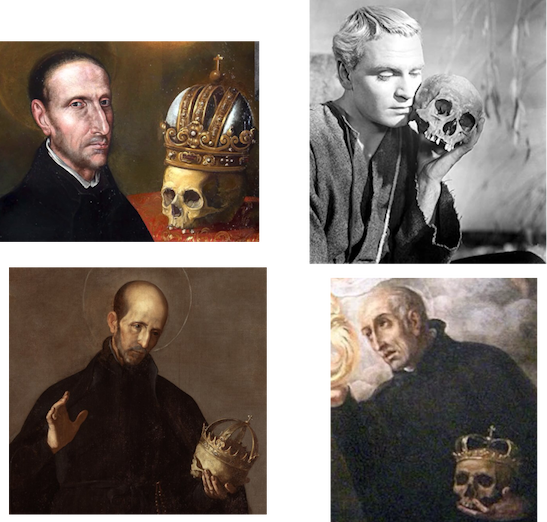
Hamlet is a story about a nobleman who finds out that his father was murdered by his own uncle, through poison to be exact. Widely considered to be the greatest play of all time, written by a playwright whose identity has never been publicly agreed upon, Hamlet has already had its fair share of theories as to whether the play was biographical to some level.
It was published right around 1600, technically having a few revisions throughout its release. But this was barely thirty years after the death of Don Francisco Crespí de Borja, the great grandson of the notorious Pope Alexander VI (Roderigo Borgia).
Francis Borgia (as he is generally called) was the main overseer of the creation of the Jesuits, in my opinion. But did you also know that his grandfather, Juan/Giovanni, was murdered by his own brother, just like King Hamlet?
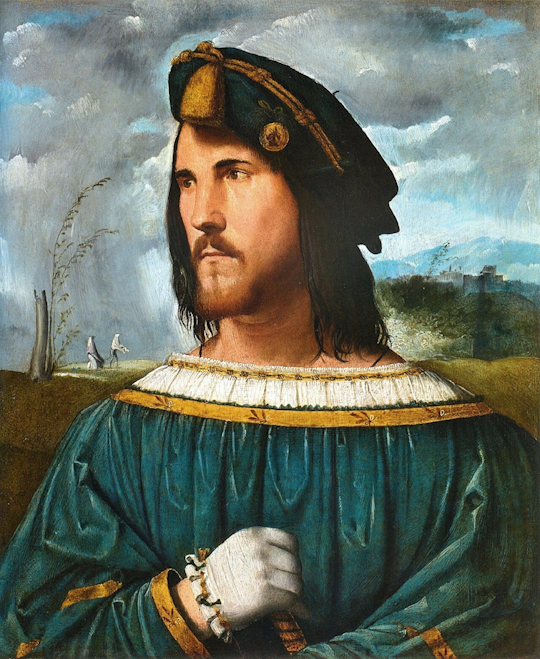
Pope Alexander VI was known for almost directly behaving in an anti-christian manner, almost as if he was following a reverse belief system. But his first son, Cesare Borgia, had a role that was oddly similar to the Jesuit's Black Pope of today. His father, Alexander/Roderigo, (the way they repeat and change names easily gets confusing, as if by design...) was a very lazy and perverse man who openly bought his way to the Papal Crown, but ever since his first son was a baby, Cesare was the one who led most of the dirty work for his family. Cesare even had the power to hire Lenardo da Vinci as his engineer.
Part of the foundation of Popery is generally considered to be based on the idea that whoever the current pope is, should be treated as if they are Jesus himself. However, while the Jesuit Oath appears to indicate the same obedience to the pope on the surface, it seems to me that that really depends on which Pope. They have murdered other popes in the past; it may simply be that they consider their own Black Pope to be the real one. After all, Ignatius of Loyola once said:
"What seems to me white, I will believe black if the hierarchical Church so defines."
So why follow what the White Pope says if White is Black? Or perhaps certain popes of the past made orders that contradicted the orders of future popes.
So this model of the regular pope having a sort of business relationship with another kind of poser of Jesus was being done through Roderigo and his son Cesare. Because since Cesare was a baby, he and his family were deliberately using him to reframe people's image of Jesus. It's pretty crazy how almost nobody knows about this man, despite the fact that every single depiction of Jesus having brown hair and a beard is likely due to this man. There were a few other times throughout history where they slowly censored whatever the original characteristics of Jesus were, but Cesare is the one he's really been modeled after in the past 500 years.
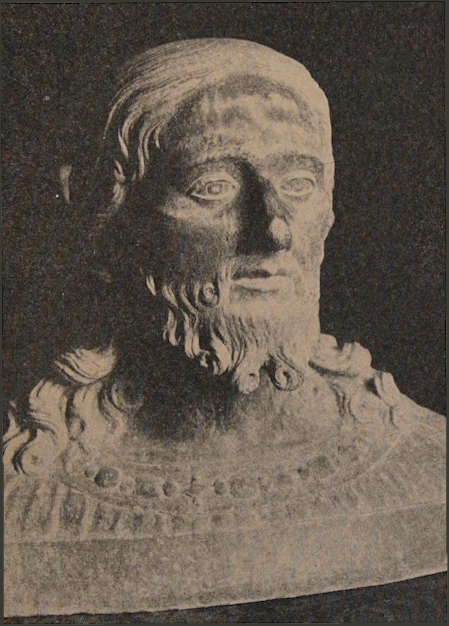
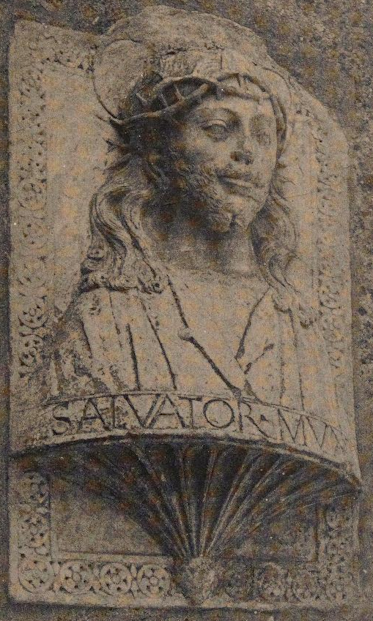
The first image is the "Bust of the Savior," originally created in the Church of San Salvatore in Termis (now destroyed) to the morgue of St. Louis' Church. The second is a similar bust of Cesare that is now destroyed.
Since the Borgia family was so rich, they simply hired all sorts of sculptors and artists to make their artwork of Cesare, and then after finishing they would title them with "Bust of the Savior" or "Miraculous Madonna" when posing with his mother as a fake Virgin Mary.
But going back to the murder of Juan, it was never confirmed who killed him. But it was believed that Cesare did this out of jealousy for the fact that Juan was their father's favorite son. Despite being a nasty man, Roderigo was reportedly distraught over this death, and feared Cesare ever since this incident, as if he just knew the truth of who killed him. A relationship full of personal conflicts may likely be the relationship the black and the white popes have always had with each other as well.
I don't know if he was murdered by poison, but did you know that the Borgias were masters of poison? To this day, nobody in the public knows how they created their Canterella poison. A poison of their own secret invention that allowed them to not only guarantee, but time the deaths of their adversaries. Cantarella is also 33 in Pythagorean Gematria, and 66 in reverse.
In fact, Roderigo died by accidentally taking his own poison that he tried to use against Adrian of Corneto in 1503. Cesare drank it too, but recovered thanks to his youth. They say there is no evidence that he was poisoned, but the lack of traces were, as you might guess, part of the nature of Canteralla.
But when it comes to Hamlet, we have the following connections:
- Francis Borgia's (great) uncle murdered his (grand) father.
- Their family was known for poison. In Hamlet, poison was the means of how he killed him, as well as what Hamlet and his mother accidentally drank at the end of the play.
- A lot of theatre was modeled after what is called Jesuit theatre. Not only would they likely have had influence over that world, but there's a part in Hamlet where there's the players within a play, and how Hamlet to some level directing them.
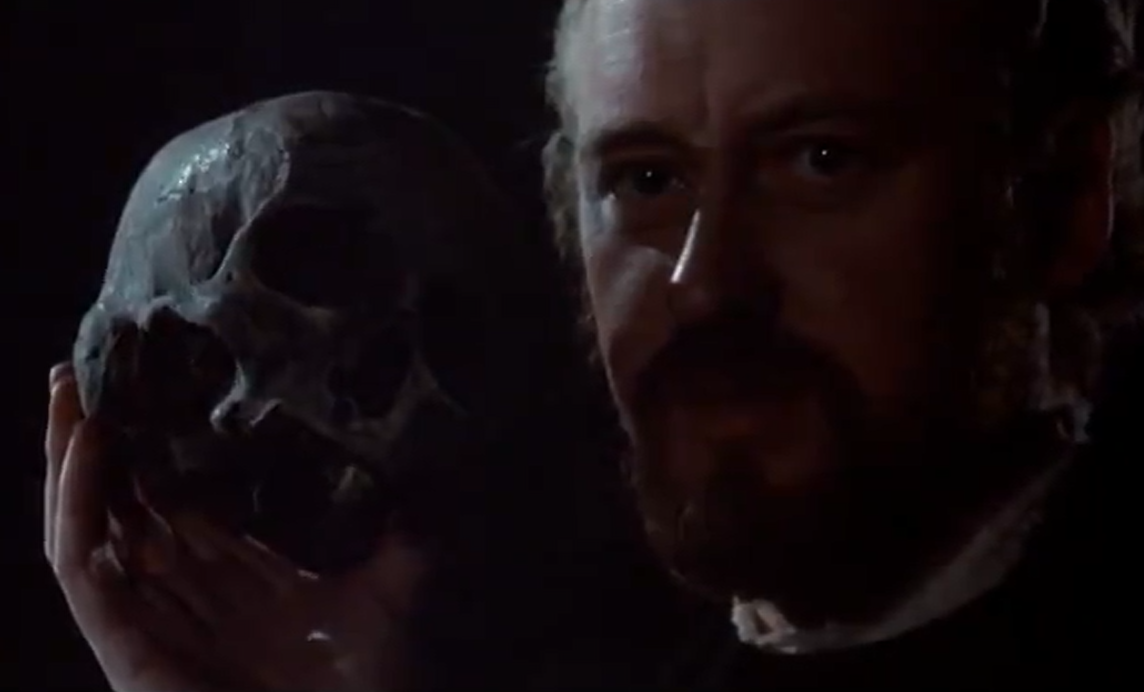
And perhaps most importantly of all would be the fact that Francis Borgia's signature image in almost all of his portraits was holding a skull, just like the iconic scene around the end of Hamlet.
The Knight's Templar were also big fans of using skulls and bones as their symbol, as if they wanted to deliberately represent death. They even originated the skull and cross bones symbol, because after all, they are pirates that base what they do off of the law of the sea.
Like I discussed in my previous article, the Kingdom of Aragon that the Borgia family came from had their own commercial code, the Book of the Consulate of the Sea. Aragon was the place the Knight's Templar escaped to in the 1300s after their alleged suppression. Prior to their suppression, they already had property by the authority of Aragon's king in the Peniscola Castle.
It also took quite some digging to find out that Francis Borgia's full name started with Don... There is a post on the Dominus ac Redemptor 1773 blog that really details this. For example, like how they traditionally called Mafia leaders the Don. In the Godfather, they called him Don Corleone.
And wouldn't you know it, Mario Puzo, the author/screenwriter of the Godfather series, openly explained how he based his story partly off of the Borgia family! He even wrote his own book about them.
People need to realize that these bad guys are not the "Lawmakers." The Jesuits are a mafia group that have spent all their years figuring out how to avoid the real Common Law that is ultimately only decided by God. It's just that they have used their knowledge on such topics to create their own Commercial Jurisdiction in most places, which is their own indirect use of the Common Law.